

Cap Lamp
The cap lamp or more accurately ‘Electric Safety Lamp’ is powered by a battery carried on the miner’s belt and a cable running up to the lamp. The lamp may be slotted onto the front of the miner’s helmet by means of a clip or can be detached and used as a flashlight for performing tasks underground. The sight of groups of miners walking through tunnels or being transported to the surface in the ‘cage’ illuminated by the light of their cap lamps, is an enduring image that has come to symbolise our industrial heritage.

The Oldham headlamp was introduced into UK pits during the 1940s. The lamp unit is sealed to prevent gas penetrating the casing thus eliminating the possibility of ignition by electrical sparks. In recent years, manufacturers have made the transition to Light Emitting Diodes (LED bulbs) which together with lithium batteries, provide much brighter illumination for longer periods. Cap lamps are issued from a lamp-room located on the pit-top where units are charged and tested prior to the next shift. The design has found other uses above ground, notably, applications in the fire and rescue service. Since the Falklands War in 1982, the availability of emergency cap lamps aboard Royal Navy ships has become mandatory. Prototypes for battle-grade charging units were trialled at Annesley Colliery.

Fig 2: Miners helmet and belt complete with cap lamp battery and self-rescuer at Pleasley Pit Mining Museum. Photo Credit – David Amos
The most significant development in electric lighting was the introduction of the battery cap lamp in the 1930’s…The main advantage was the greater illumination that it gave…the light of the cap lamp was directed at where it was needed, leaving both hands free for work. Previously, many miners working in gloomy conditions had suffered from miners nystagmus, a distressing eye compliant caused by poor light. After the widespread introduction of the cap lamp, this condition gradually disappeared.
From Coalmining: A Handbook to the History of the Coalmining Gallery. Salford Museum of Mining, 1981, p.71-72.

Fig 3: A Miners cap lamp consists of the battery, cable and headpiece.
The cap lamp consists of three main parts. The battery, either lead acid or alkaline, is either carried in a stainless steel or hard rubber container on the wearers belt. The head piece, of plastic or aluminium alloy, fits on the miner’s helmet, and the switch is usually incorporated in it. Headpiece and battery are connected with a twin core cable covered with tough rubber or with neoprene, a fire and acid resisting rubber substitute. To avoid danger due to the battery being short circuited should the cable be severed, a fuse is included under the battery lid.
From Practical Coal Mining for Miners, 1951, Vol. 1, p. 240.

Fig 4: Main parts of a cap lamp. Source: Practical Coal Mining for Miners, 1951, p.240.
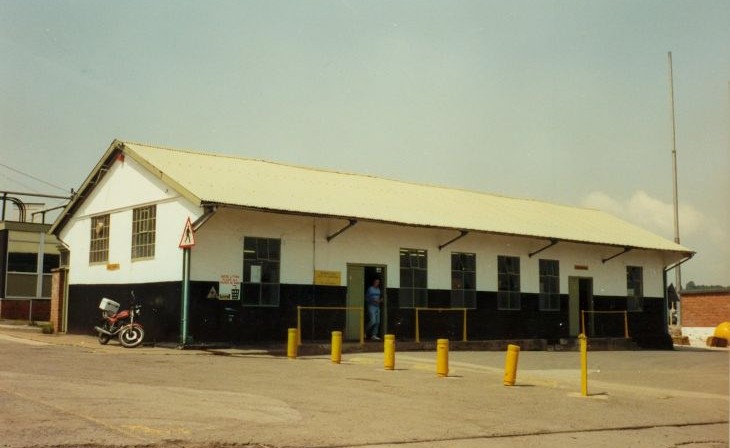
Fig 5: Annesley Colliery lamp cabin in the early 1990’s. Photo Credit – David Amos
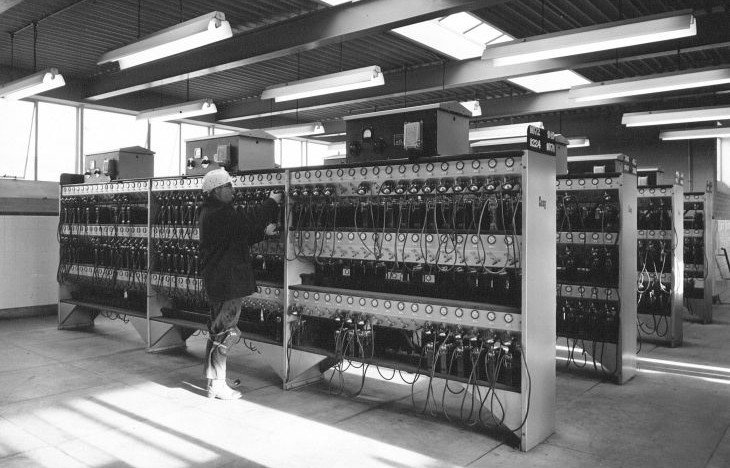
Fig 6: Lamp cabin charging racks at Hucknall Colliery, Nottinghamshire, in 1963. Photo Credit – David Amos collection
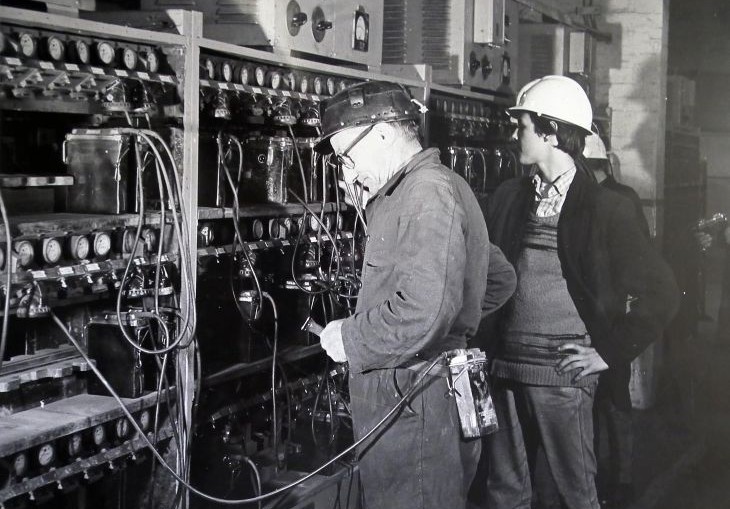
Fig 7: Miners putting their cap lamps on in the lamp cabin at the start of the shift.

Fig 8: Annesley miner, Mick Marriott, with cap lamp on in 1999.
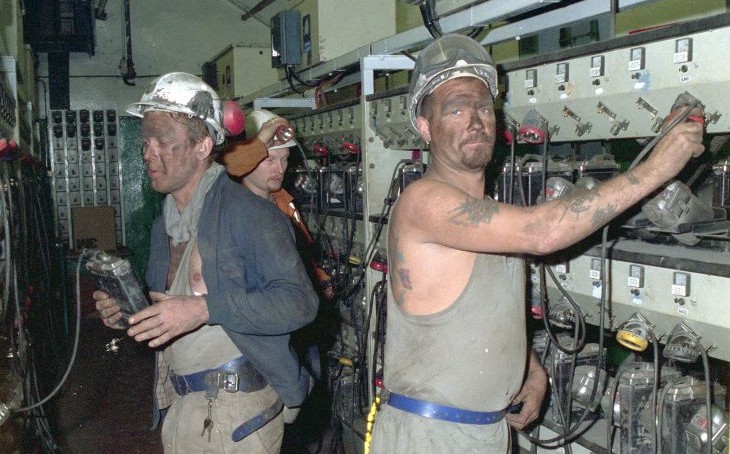
Fig 9: Annesley miners put their cap lamps away for the last time in late January 2000 following the closure on the pit. Photo Credit – Chad newspaper


