

Pit Tips
Pit tips, sometimes termed ‘dirt hills’ or ‘dot hills’ (locally in Derbyshire and Nottinghamshire dialect) are today, typically designated as nature conservation areas. These features give the impression that Nottinghamshire is naturally hilly. The landscaped tip at Teversal is so tall that it stands as the highest point in the county and is popular with cyclists and walkers. However, only a few years ago, the local landscape was characterised by sprawling grey mountains made from pit ‘slurry’. Tipping methods in the past involved dumping waste from pit-tubs onto a single location which created conical tips.

Fig.1: Conical pit tip at Cotes Park Colliery, Somercotes, Derbyshire in 1946. Photo Credit: Selstonia Living Heritage Project.

Fig.2: The conical pit tips at Kirkby Summit Colliery, Kirkby-in-Ashfield, Nottinghamshire, were referred to locally as the ‘Pyramids of Kirkby’. Photo Credit: Kirkby Heritage Centre.

Fig.3: Aerial ropeway at Bestwood Colliery pit tip in the late 1950’s. Photo Credit – Coal Authority
As production increased due to mechanisation, tubs were superseded by aerial ropeways. Aerial ropeways were gradually phased out following the Aberfan disaster (1966) in which 116 children and 16 adults were killed in a coal heap landslide. Modern tipping methods involve giant ‘Euclid’ vehicles that scrape and distribute vast amounts of pit waste across a wide area offering better management and levelling of spoil heaps. Waste disposal posesed an environmental problem for working collieries in later years, particularly in instances where the dirt to coal ratio (‘the vend’) was high.

Fig 4: Last active working pit tip in Nottinghamshire at Thoresby Colliery, Edwinstowe, in 2014 a year before the closure of the colliery. Photo Credit – MuBu Miner

Fig 5: Old Newstead pit tip and former minewater lagoons in 2013. Photo Credit – MuBu Miner
The Newstead Colliery site also processed pit waste from nearby Linby Colliery from the early 1970’s to 1988. Originally the site was the location of a vast marshalling yard and loco sheds for the Great Central Railway (1898-1966) and is now returning to nature. A set of lagoons for pumping mine-water were constructed there in the late 1980’s to protect the underground workings of Annesley-Bentinck Colliery, the last deep coal mining in the region. It was the site of the ill fated Newstead and Annesley Country Project (circa 2010-2012) which ran out of funding. Popular with bird watchers, siting on the old Newstead pit-tip have included red kites and a hoopoe.

Fig 6: Overlay map of Newstead and Annesley, Nottinghamshire. The proposed country park would have been developed on the former Newstead Colliery pit-tip which went from a railway marshalling yard, to a pit-tip, then lagoon ponds as part of a mine-water pumping scheme to a failed country park in the early 21st century! Photo Credit: Newstead and Annesley Country Park: Past, Present and Future (2012).
Adventure Playgrounds of the Past
In spite of the dangers of disappearing down bottomless pits, drowning or being burned to death in underground caverns of fiery quicksand, the pit tips represented an irresistible playground to local boys. Whenever we scaled the barbed-wire fence to play war-games in the forbidden zone, someone would inevitably lose their footing and go home ‘caked’ head-to-foot in grey slurry.
An inspired game conceived by my youngest brother and two of his school friends involved racing abandoned bicycles down the steep incline of the pit tips. My brother’s friends were ‘hefty’ lads who dwarfed the spindly bicycle frames and used big boots to brake their descent. Trundling noisily on bare wheel-rims, the bicycles careered down craggy slopes, kicking-up so much dust that visibility was reduced to inches. Pot holes were a constant threat because they could propel the rider head-first over the handlebars.
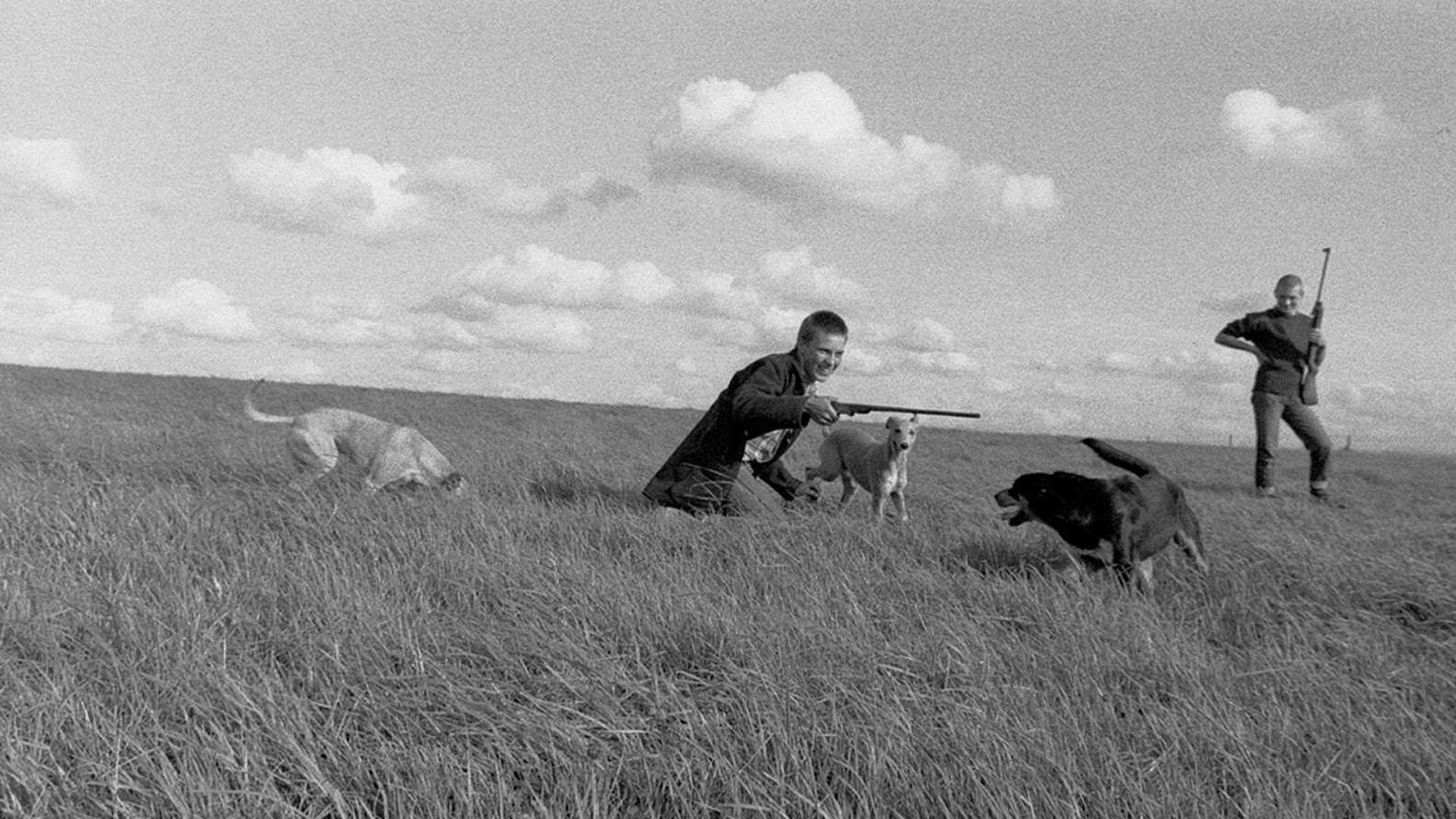
Fig 7: Hunting with air rifles and dogs on the old pit tip at Blidworth, Nottinghamshire, in the early 1980’s. Photo Credit: Paul Fillingham
Hunting with dogs and air-rifles was another activity, sometimes practiced at night, assisted by battery belts and cap lamps. It was unwise to be on the tip after dark as you ran the risk of becoming a target. In 1982, a local arms race saw the introduction of more powerful weapons. Shotguns guaranteed more rabbit-stew but were so loud they couldn’t be fired close to the village. This issue was eventually resolved by attaching silencers made from stacks of metal washers. A lunar crater at base-camp provided a convenient rifle-range. It had a selection of targets, including; traffic cones, bottles, tin cans and camp-stove cylinders. Oil drums made the most noise but detergent bottles filled with red poster-paint were a popular choice, creating a blood-and-guts display worthy of any horror video.
TV vacuum-tubes were a cherished target as they could be floated on the grey lagoons. A steady aim would reward any capable marksman with an implosion that looked like the opening credits to Gerry Anderson’s TV puppet-show ‘Stingray’.

Fig 8: Adventure Playgrounds of the early 21st century! Trial biking on the Bentinck Colliery pit tip near to Kirkby Woodhouse in 2005. Photo by MuBu Miner.
Black to Green: Pit Tips through the Ages

Fig 9: Cossall Colliery pit tip in 1969, a brownfield site following the closure of the colliery in November 1966. Photo Credit – Coal Authority

Fig 10: Cossall Colliery pit tip as an artifical ski slope in the 1990’s. Photo Credit – unknown

Fig 11: Cossall Colliery in 2016, fifty years after the closure of the colliery. The artifical ski slope closed in the early part of the 21st century. Photo Credit – MuBu Miner

Fig 12: View from the summit of the former Cossall Colliery pit tip, looking north towards Eastwood, in 2016. Photo Credit – MuBu Miner

Fig 13: Nature fighting back! Fungi growing on the Bentinck pit tip in 2016, sixteen years after tipping finished. Photo Credit – MuBu Miner

Fig 14: Gedling Country Park, Nottinghamshire, is located on the site of the former pit tip for Gedling Colliery (1899-1991). Photo Credit – MuBu Miner

Fig 15: Working pit tip for Moorgreen Colliery, Eastwood, in 1980. The pit tip was located at Brinsley, one mile from the colliery. Photo Credit – Tony Fisher

Fig 16: Sheep grazing on the old Moorgreen Colliery pit tip in 2019 under the shadow of a new 21st century distribution warehouse. Photo Credit – MuBu Miner
The pit tip for Moorgreen Colliery (1865-1985) features in the Brinsley Headstocks digital trail devised by Mine2Minds Education in 2022. More details athttps://mytrail.co.uk/trail01-10-moorgreen-viewpoint-brinsley/
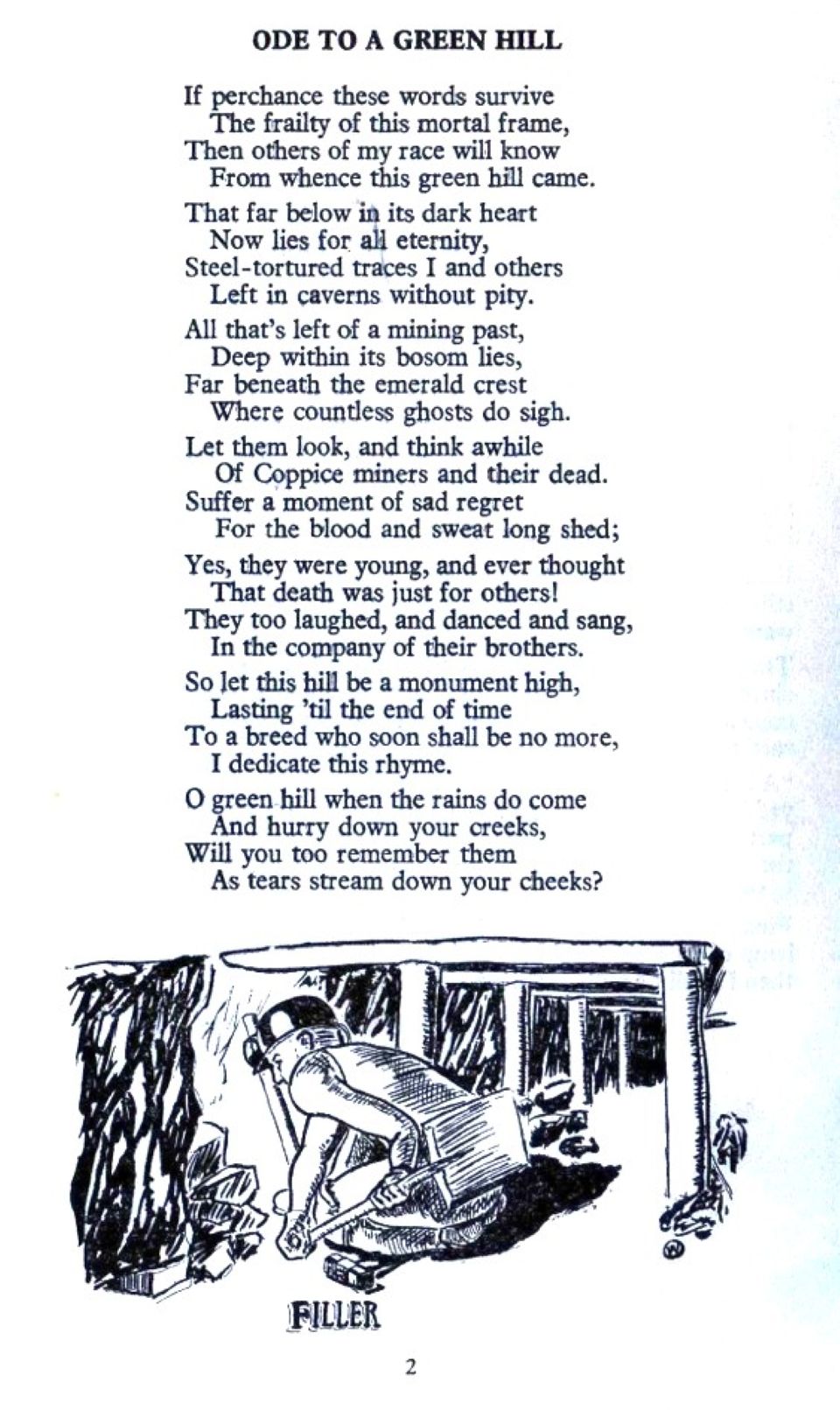
Fig 17: ‘Ode to a Green Hill’, Owen Watson’s evocative poem about changing times for the Coppice Colliery pit tip near Heanor, Derbyshire.
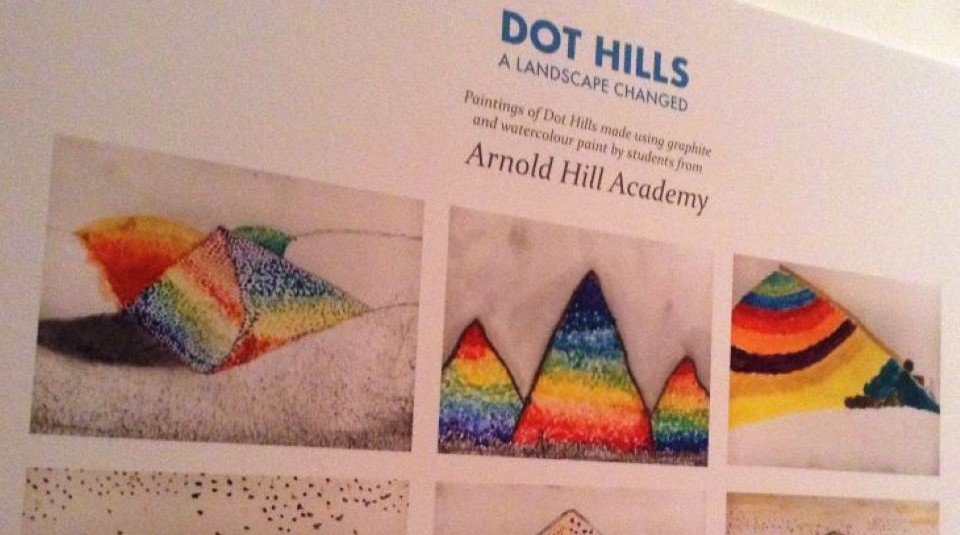
Fig 18: Dot’ills art project, a 2017 Nottingham Trent University funded project in conjunction with local primary schools.
More details on the 2017 Dot’ills arts project, a collaboration between Kidology Arts and Nottingham Trent University at https://www.kidologyarts.co.uk/dothills
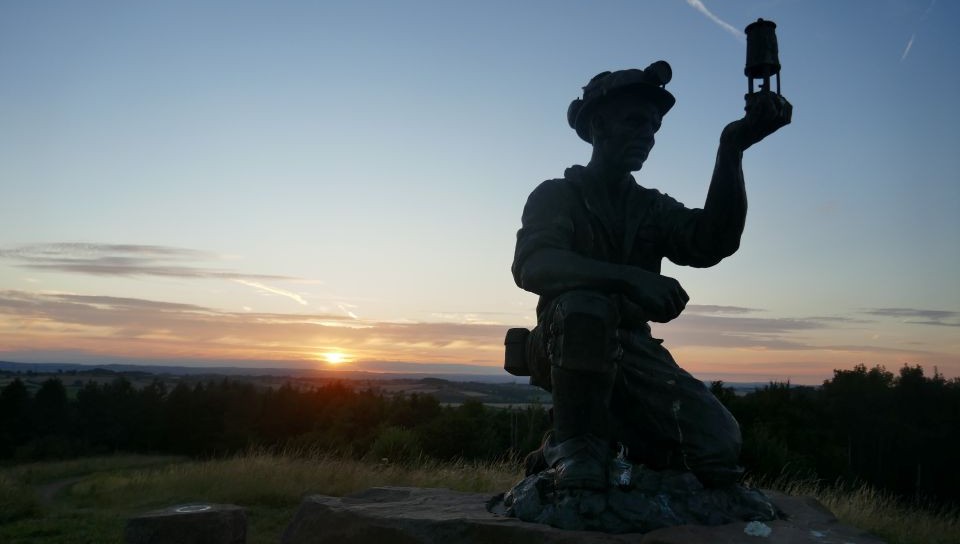
Fig 19: Silverhill Sunset – Miners statue at the summit of the former Silverhill Colliery pit tip, now part of Silverhill Woods, in August 2024. Photo Credit – MuBu Miner


